The Legal Validity and Necessity of Hospital Certificates in the Philippines:
Various medical certificates issued by Philippine hospitals, such as Medical Certificates, Hospital Records, Diagnosis Reports, Surgical Reports, Vaccination Certificates, and Birth Medical Records, are legally valid in the Philippines, but are generally not directly recognized in other countries. To gain acceptance from foreign governments, courts, schools, hospitals, immigration authorities, and other institutions, these documents must undergo Philippine Notary, notarization, and DFA Apostille processing. Only hospital certificates that have undergone DFA Apostille certification are considered valid and internationally recognized.
The types and scope of certified medical documents in the Philippines:
Almost all medical documents issued by legitimate hospitals, clinics, and medical professional institutions can be included in the DFA certification system, including:
– Certificate of Confinement
– Discharge Summary
– Medical Certificate / Medical Findings
– Surgery or Procedure Report
– Pathology Report
– Vaccination Book / Yellow Card
– COVID-19 test results, health certificates (Fit-to-Travel / Fit-to-Work)
– Medical Birth Certificate for newborns.
These documents are very common for international use, especially in scenarios such as visas, immigration, insurance claims, school enrollment verification, and health checks.
Notarization Requirements for Philippine Hospital Certificates Before DFA Apostille:
Philippine hospital certificates cannot be submitted directly to the DFA . The following prerequisite steps must be completed:
– Original document issued by the hospital and signed by a doctor
– Official seal affixed by the hospital's Medical Records Section
– Notarial acknowledgment by a lawyer
– Some hospital documents require verification of authenticity by the RTC (Regional Court)
. Only after completing these steps are the documents eligible for DFA Apostille processing. If signatures or seals are missing or procedures are not followed, the DFA will reject the document outright.
The typical processing time for Hague Apostille of Philippine hospital certificates
is as follows:
– Notarization: 1–3 business days
– RTC Legalization (if required): 2–5 business days
– DFA Apostille: 3–7 business days
– Expedited processing: same-day or next-day processing (limited to specific offices and depending on document type).
For urgent travel abroad, immigration document requests, court hearings, etc., it is recommended to process the application as early as possible or use a professional agency for expedited processing.
The cost breakdown for Hague Apostille of Philippine hospital certificates
includes:
– Hospital official issuance fee (if a second copy is required)
– Notary public fees
– RTC authentication fee (if applicable)
– DFA authentication fee
– Expedited processing fee (varies significantly depending on the timeframe)
. For a large number of documents, the fee will be calculated per document. Professional agencies offer package services to avoid applicants having to make frequent trips to hospitals, courts, and the DFA.
Translation requirements for Philippine hospital certificates used abroad:
Most Hague Convention countries recognize English medical documents, such as the United States, Canada, the United Kingdom, and Singapore.
However, additional notarized translation may be required in the following situations:
– Government departments in China and Taiwan
– Japan, South Korea, and some European countries
– Certain insurance companies or school internal audit systems
. If needed, I can provide you with multilingual hospital certificate translation guidelines or formats.
Analysis of Common Rejection Issues in Philippine Hospital Certificate Hague Apostille Certification
: DFA often rejects applications due to the following reasons:
– Hospital signature does not match the sample record
– Hospital has no seal or the seal is blurry
– Application submitted directly without notarization
– Supporting documents not provided according to the latest procedures
– Medical documents are photocopies instead of originals
– Doctor's signature cannot be verified
. Checking the format of hospital documents and the content of signatures and seals in advance can effectively avoid rejection.
The role of Philippine hospital certificates in cross-border applications extends
after Hague Apostille certification. The documents can be used for:
– Travel to China (birth certificate replacement, medical examination, family visit procedures)
– International immigration applications
– Commercial insurance claims
– International school health registration
– Court case evidence
– Overseas medical referrals
– Consular application procedures
. This is a commonly used international standard procedure in the employment verification processes of many expatriates, Chinese families, and businesses.
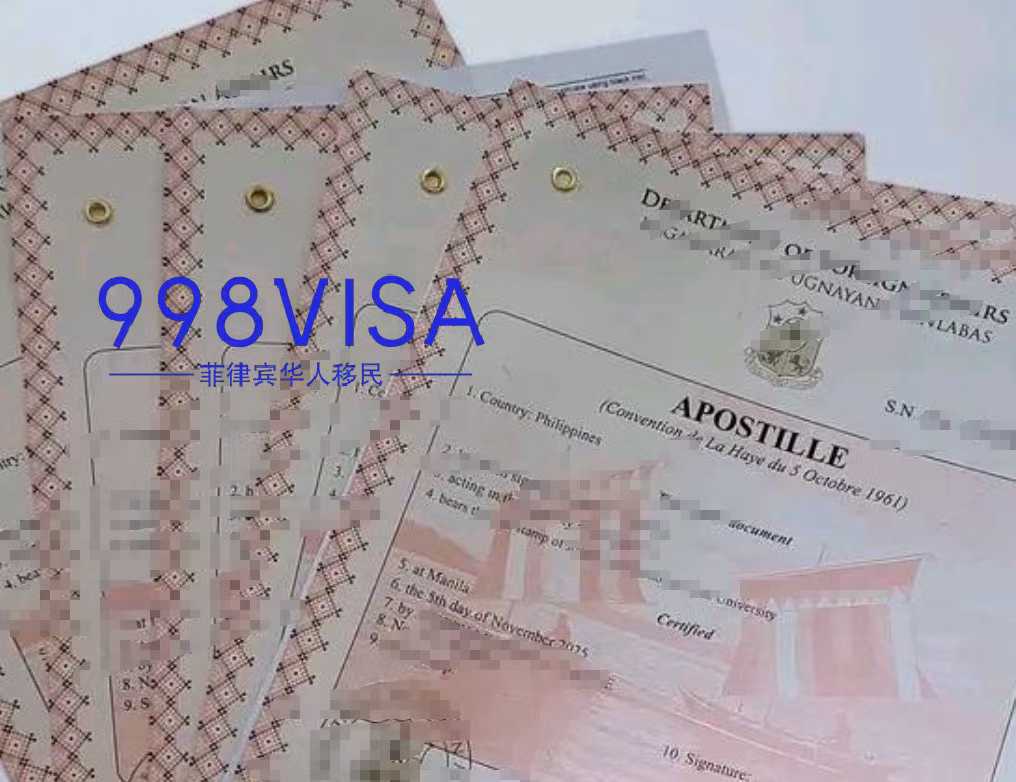
How to Use Philippine Hospital Certificates in China:
Since China is not a signatory to the Hague Convention, some documents may still require consular legalization by the Chinese embassy after DFA Hague Apostille certification (depending on the intended use). If needed, I can provide a further version of the "Guide to Using Philippine Hospital Certificates in China".
Need fast processing of hospital certificates, expedited services, notarization, or DFA Hague Apostille certification
? Contact Filipino Chinese Immigration (998VISA) for professional assistance:
WeChat: BGC998 / VBW333
Telegram: @BGC998 / @VBW777.
A registered company in Makati, Philippines, with 19 years of experience, we can assist with document retrieval, notarization, court proceedings, and the entire DFA process, including door-to-door document collection.
留言
發佈留言